


Current Status and Future Development Trends of the Eyewear and Wearable Optical Technology Industry

Abstract
The global eyewear industry, spanning traditional corrective lenses, lifestyle optical products, and emerging wearable technologies, has entered a period of rapid evolution. This paper examines the current market status, evaluates key drivers and challenges, and outlines the future development trends through 2035. We draw upon authoritative market data to provide rigorous support for the industry’s trajectory, highlighting opportunities shaped by demographic change, technological convergence, digital transformation, and health-oriented consumer behaviors.
1. Introduction
Eyewear — once a purely functional category focused on vision correction — has expanded into a broad ecosystem that includes:
- Traditional optical glasses and sunglasses
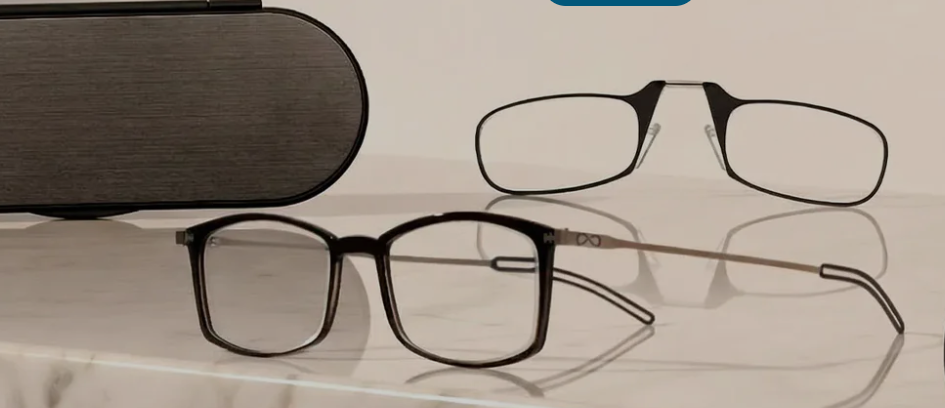
- Ultra-portable readers (e.g., thin, pocket-friendly designs)
- Blue-light filtering lifestyle products
- Smart wearable eyewear with digital and augmented reality (AR) features
Companies like ThinOptics reflect this diversification by offering lightweight, convenience-oriented solutions, indicating shifting consumer priorities toward mobility, aesthetics, and multifunctionality.
2. Current Status of the Eyewear Industry
2.1 Global Market Size and Structure
Recent authoritative estimates illustrate the substantial scale and segmentation of the eyewear market:
- Global eyewear market value:
• Estimated at USD 130.2 billion in 2025, projected to reach ~USD 252.2 billion by 2034 (CAGR ~7.3%).
• Alternate analysis places market value at USD 214.4 billion in 2025, reaching USD 402.7 billion by 2033 (CAGR ~8.2%).
These figures reflect the large scale and growth resilience of the sector across economic cycles.
2.2 Demographic and Health Factors
Aging populations and rising visual impairment rates are key demand drivers:
- Nearly 50% of the global population is expected to be myopic by 2050, according to ophthalmologic research.
This demographic shift supports increased demand for corrective eyewear, including readers and progressive lenses.
2.3 Technological Segmentation
The industry has delineated multiple product sub-segments:
- Traditional eyewear (prescription glasses, sunglasses) — still the largest revenue contributor
- Lifestyle optical products — blue-light filters, ultra-thin portable readers
- Wearable smart eyewear — AR/VR-enabled glasses, integrated sensors
- Connected optical devices — IoT-enabled eyewear with health tracking
The rise of smart eyewear demonstrates the industry’s shift from purely optical correction toward interactive and connected experiences.

3. Key Drivers of Current Industry Development
3.1 Digitalization and E-Commerce
E-commerce has become a dominant retail channel for eyewear:
- Online demand surged during and after the COVID-19 pandemic, establishing digital sales as a long-term channel trend.
Consumers increasingly compare styles, prices, and prescriptions online, pushing brands to integrate AR try-on tools and digital fittings.
3.2 Consumer Lifestyles and Health Awareness
Lifestyle shifts — including widespread screen use — fuel demand for innovations like blue-light filters and portable readers. Products that alleviate digital discomfort or seamlessly integrate with mobile devices (e.g., ThinOptics attachments) reflect consumer preferences for mobility, comfort, and convenience.
3.3 Technology Convergence
Smart wearable eyewear integrates digital technologies:
- The AR smart glasses market was valued at around USD 2.46 billion in 2025, with potential to expand to USD 14.38 billion by 2033 (CAGR ~24.2%).
- Smart glasses shipments could reach ~28.2 million units by 2029, supported by mainstream product accelerators such as Meta’s Ray-Ban series.
This demonstrates the emergence of computing-integrated optics as a meaningful frontier.
4. Future Development Trends (2026–2035)
Based on industry forecasts and emerging patterns, the following trends are expected to shape the next decade:
4.1 Continued Market Growth and Penetration
The eyewear industry is projected to maintain steady growth through 2035, driven by both necessity (vision correction) and lifestyle demand. Expansion is expected across both mature (North America, Europe) and emerging markets (Asia-Pacific, Latin America).
Population aging and rising digital device use support sustained demand for corrective lenses and protective optical products.
4.2 Smart and Augmented Reality Eyewear Expansion
Smart eyewear, particularly AR-integrated devices, is poised to grow much faster than traditional eyewear categories:
- The AR smart glasses segment’s ~24% CAGR through 2033 signals strong consumer and enterprise adoption.
- Integration of AI and visual computing suggests future eyewear may serve as mobile computing platforms, not just optical accessories.
This elevates eyewear to a digital interaction interface, similar to smartphones.
4.3 Personalized and Health-Driven Products
Products will increasingly leverage data and sensors to offer personalized visual experiences:
- Adaptive focus lenses that automatically adjust to distance
- Real-time posture or strain tracking to reduce eye fatigue
- Integration with health platforms (e.g., sleep, activity metrics)
Medical-grade wearable optics may merge vision correction with preventive health monitoring.
4.4 Sustainability and Material Innovation
Consumer preference for sustainability is shaping product design:
- Lightweight, recyclable frames
- Bio-based lenses and eco-friendly packaging
- Durable, long-lifecycle optical solutions
Brands that successfully communicate sustainability credentials may command stronger loyalty and premium positioning.
4.5 Omni-Channel Experience and Digital Integration
Future eyewear distribution will be defined by seamless physical + digital experiences:
- Virtual try-on using AR technology
- Customization via digital platforms before order placement
- Post-purchase support integrated with mobile apps
This trend reflects broader retail transformation toward data-driven personalization.
5. Challenges and Strategic Considerations
Despite strong prospects, industry players face several challenges:
- Regulatory Compliance: Smart eyewear raises privacy and safety concerns due to embedded sensors and cameras.
- Consumer Education: Adoption of advanced optical technologies depends on clear communication of benefits.
- Price Sensitivity: High-end smart eyewear must balance innovation with affordability.
Addressing these challenges will determine sustained competitive advantage.
6. Conclusion
The eyewear and wearable optical technology industry stands at a critical juncture — evolving from a traditional corrective lens market to a technology-enabled, lifestyle-centric ecosystem. With robust market growth forecasts, rapid innovation in smart optics, and rising consumer expectations for personalized solutions, the industry’s future through 2035 promises dynamic expansion and diversification.