


The U.S. Hotel Experience–Derived Consumer Industry: Market Status and Development Trends

Abstract
The hotel experience–derived consumer industry in the United States has emerged as a hybrid sector integrating hospitality culture, lifestyle consumption, and sensory experience design. Driven by experience economy theory and digital marketing innovation, this industry is gradually evolving beyond traditional accommodation services. This article analyzes the current market environment, structural characteristics, technological drivers, and future development trajectory of the industry in the U.S. market.
1. Industry Definition and Market Background
The hotel experience–derived consumer industry refers to the commercialization of hospitality culture into daily lifestyle products and spatial experience solutions. Unlike traditional hospitality operations, this industry focuses on transforming intangible service experiences into tangible consumer goods.
In the United States, the hospitality market has shown steady recovery after the pandemic period. According to industry reports from American Hotel & Lodging Association, the sector has demonstrated resilient performance driven by domestic travel demand and premium service consumption.
The core logic of this industry shift is the transformation from service value selling to emotional and cultural value monetization.
2. Macroeconomic Environment of the U.S. Market
2.1 Consumption Upgrade and Lifestyle Economy
The U.S. consumer market is experiencing structural changes characterized by:
- Rising disposable income among middle- and high-income groups
- Increased willingness to pay for experiential products
- Growing attention to living environment quality
Experience-oriented consumption has become an important driver of lifestyle product markets.
2.2 Post-Pandemic Hospitality Recovery
The U.S. hospitality and travel sector has gradually recovered due to:
- Domestic leisure travel growth
- Business travel normalization
- Large-scale event-driven tourism demand
Industry participants are shifting strategic focus from expansion scale to service quality and experience differentiation.
3. Core Characteristics of the Hotel Experience Consumer Industry
3.1 Commoditization of Experience Value
One of the most significant trends is the commoditization of hospitality experience.
Products in this category typically include:
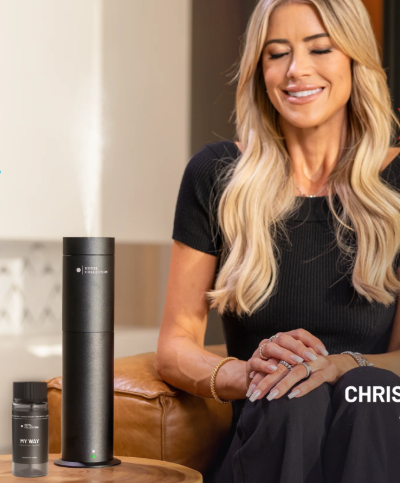
- Ambient fragrance products
- Home environment sensory design goods
- Travel lifestyle accessories
- Space atmosphere enhancement solutions
The fundamental market logic is to allow consumers to reproduce premium hospitality experiences in residential or commercial environments.
This trend reflects the expansion of emotional consumption theory, where purchasing behavior is influenced by psychological comfort and symbolic identity.
3.2 Space Experience as a Competitive Dimension
Modern commercial spaces increasingly emphasize sensory marketing.
Research indicates that environmental factors such as scent, lighting, and acoustic design can significantly influence:
- Customer dwell time
- Purchase conversion rate
- Brand perception stability
Retail and hospitality operators are therefore investing more resources in environmental experience engineering.
3.3 Digital Marketing and Content-Driven Consumption
U.S. consumers in lifestyle product markets rely heavily on digital information channels.
Key communication mechanisms include:
- Social media content marketing
- User-generated reviews
- Video-based product demonstrations
- Story-based brand communication
Especially among younger demographics, narrative branding often demonstrates higher conversion efficiency than functional advertising.
4. Competitive Structure of the Industry
The industry presents a multi-sector competitive pattern rather than a single-industry monopoly structure.
Major participants include:
- Hospitality enterprise derivative business units
- Lifestyle consumer product companies
- Fragrance and environmental technology firms
- Tourism experience design organizations
The market demonstrates strong cross-industry integration characteristics.
5. Technology-Driven Industrial Transformation
5.1 Smart Environment Management
With the development of IoT technologies, spatial experience optimization has entered a data-driven stage.
Applications include:
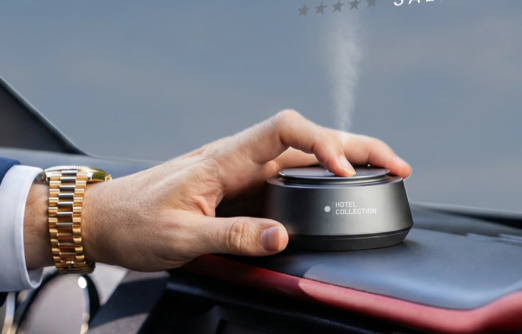
- Intelligent scent diffusion systems
- Automated environmental regulation devices
- Experience quality monitoring platforms
These technologies improve the scalability and reproducibility of experience products.
5.2 Sustainability and Green Consumption
Environmental sustainability has become a core market requirement in the United States.
Industry development emphasizes:
- Renewable raw material usage
- Low-carbon production processes
- Eco-friendly packaging systems
Regulatory pressure and social awareness jointly accelerate this transformation.
6. Future Development Trends (2025–2035)
6.1 Continuous Expansion of Experience Economy
The industry is expected to extend from hospitality spaces to broader life scenarios, including:
- Residential living environments
- Workplace atmosphere design
- Social entertainment spaces
Emotional value will become a primary competitive factor.
6.2 Personalized Experience Customization
Demand for individualized sensory environments is rising.
Future growth segments may include:
- Customized fragrance systems
- Personalized spatial design solutions
- Membership-based experience ecosystems
6.3 Integration of Physical and Digital Consumption
The industry will increasingly adopt hybrid business models combining:
- Virtual product presentation
- Social content dissemination
- Loyalty membership platforms
- Online-to-offline consumer interaction
7. Industry Challenges
Despite strong growth potential, several structural risks remain:
- Product differentiation pressure due to market entry expansion
- Increasing difficulty in building long-term cultural brand assets
- Sensitivity of premium consumption demand to macroeconomic fluctuations
High-end experience consumption may exhibit cyclical volatility under economic uncertainty.
8. Conclusion
The U.S. hotel experience–derived consumer industry is transitioning toward a culture-driven consumption ecosystem. The industry has moved beyond traditional hospitality service boundaries and is increasingly shaped by emotional value creation, sensory technology innovation, and lifestyle identity recognition.
In the next decade, market growth will likely depend on consumer psychological demand upgrading, spatial experience technology advancement, and cultural brand asset accumulation. Enterprises with strong innovation capability and differentiated experience design are expected to achieve superior competitive positioning.