



The Development and Future Outlook of Europe’s High-End Custom Sofa Industry

How Italian Craftsmanship, Personalization, and AI Are Shaping the Next Decade of Luxury Living
As consumer lifestyles evolve and homes become an increasingly important reflection of personal identity, the European high-end custom sofa industry is entering one of the most transformative periods in its history. Once defined primarily by artisanal craftsmanship and showroom-based sales, the sector is now being reshaped by digital commerce, artificial intelligence, sustainability, and a growing demand for personalization.
For brands such as Divani.Store and other Italian luxury furniture manufacturers, the convergence of tradition and technology is creating unprecedented opportunities. Industry data, expert forecasts, and emerging consumer trends all point toward a future in which custom-made sofas become one of the most influential categories within the global luxury home furnishings market.
Europe’s Luxury Furniture Market Enters a New Growth Phase
The European furniture industry remains one of the largest and most influential furniture markets in the world.
According to Grand View Research, the European furniture market is projected to grow from approximately $174.9 billion in 2022 to over $271.8 billion by 2030, representing a compound annual growth rate (CAGR) of approximately 5.7%. Within this broader market, upholstered furniture and sofas are among the fastest-growing categories, driven by rising consumer spending on home improvement and premium living environments.
At the same time, the European luxury furniture segment continues to outperform many traditional furniture categories. Market researchers estimate that Europe’s luxury furniture market exceeded $6.4 billion in 2024 and is expected to surpass $8 billion by 2030, with some forecasts suggesting the market could approach $18 billion by 2033.
These figures indicate a clear industry trend:
Consumers are increasingly willing to invest in premium, long-lasting, and highly personalized furniture solutions.
As the centerpiece of modern living spaces, sofas are positioned to capture a significant share of this growth.
Why Italy Continues to Dominate the High-End Sofa Industry
When discussing luxury furniture, no country holds greater influence than Italy.
According to recent research from Intesa Sanpaolo, Italy’s furniture industry generated approximately €26.7 billion in revenue in 2025, maintaining its position as Europe’s largest furniture producer and outperforming Germany’s €21.7 billion furniture sector.
Italy’s dominance is built upon three fundamental strengths:
Design Excellence
Milan remains the global capital of furniture design.
Events such as Salone del Mobile attract hundreds of thousands of industry professionals annually and continue to influence furniture trends worldwide. What Paris represents for fashion, Milan represents for furniture.
Craftsmanship Heritage
Unlike mass-produced furniture, Italian luxury sofas often incorporate:
- Hand-tailored upholstery
- Artisanal stitching
- Custom dimensions
- Small-batch manufacturing
This commitment to craftsmanship creates a level of quality and exclusivity that mass-market competitors struggle to replicate.
Lifestyle Branding
Today’s consumers are not merely purchasing a sofa.
They are purchasing:
- Italian design culture
- Lifestyle aspirations
- Heritage craftsmanship
- Social identity
This mirrors the evolution of luxury fashion, where emotional value increasingly outweighs functional value.
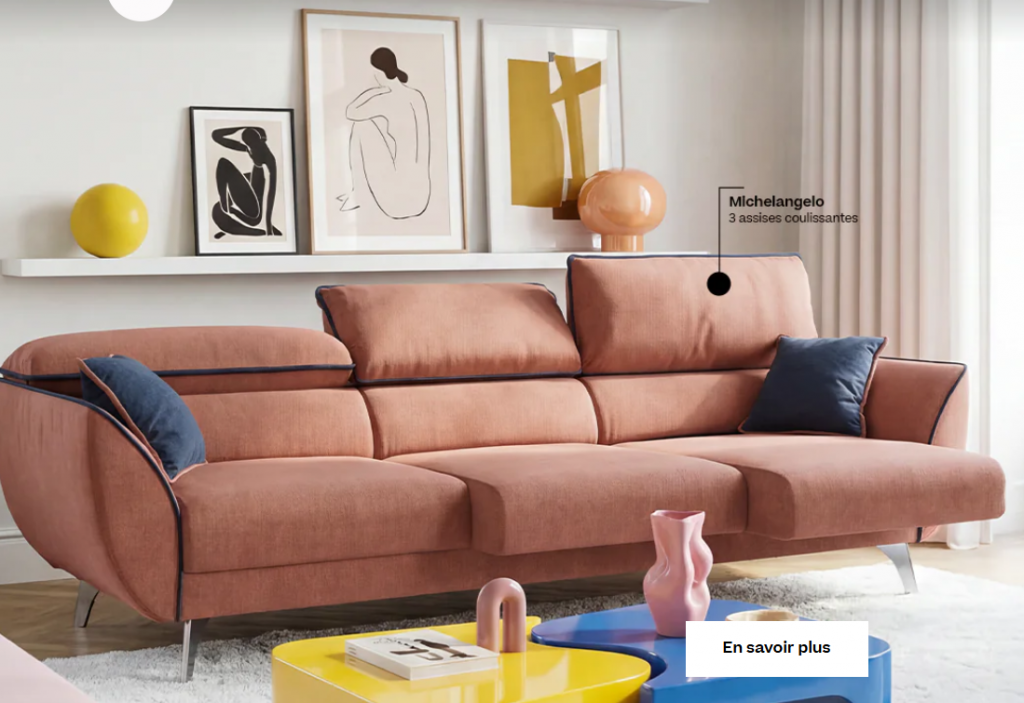
Personalization Is Becoming the New Definition of Luxury
One of the most significant developments within the industry is the rapid rise of customization.
Historically, consumers selected furniture from fixed collections displayed in retail showrooms. Today’s buyers, however, increasingly expect products tailored specifically to their needs.
Modern luxury consumers prioritize:
- Customized dimensions
- Modular configurations
- Fabric personalization
- Color selection
- Room-specific solutions
- Individual comfort preferences
Industry experts increasingly argue that customization is evolving from a premium feature into a standard expectation.
As consumers seek greater self-expression within their homes, personalized furniture is becoming a natural extension of broader lifestyle trends.
For younger affluent homeowners, individuality has become one of the strongest purchasing motivations.
Digital Commerce Is Reshaping Furniture Retail
The traditional furniture purchasing journey has undergone dramatic transformation.
For decades, buying a premium sofa involved:
- Visiting multiple showrooms
- Consulting sales representatives
- Comparing physical samples
- Lengthy decision-making processes
Today, digital channels are increasingly replacing these traditional methods.
The United Kingdom, Germany, France, and other major European markets have experienced significant growth in online furniture sales, driven by advances in visualization technology and changing consumer behavior.
Several technologies are accelerating this transition:
Advanced 3D Visualization
Consumers now expect:
- Interactive product configurators
- Real-time fabric changes
- Dimension customization
- Virtual room placement
These tools dramatically reduce purchasing uncertainty.
Direct-to-Consumer Models
Luxury furniture brands are increasingly bypassing traditional retail networks and selling directly online.
Benefits include:
- Greater pricing transparency
- Enhanced customer engagement
- Better personalization
- Stronger brand storytelling
As a result, digital-first brands are capturing a growing share of the premium furniture market.
Sustainability Is Becoming a Competitive Necessity
Sustainability is no longer a niche concern.
Across Europe, environmental awareness is increasingly influencing purchasing decisions.
Consumers are evaluating furniture brands based on:
- Material sourcing
- Product durability
- Carbon footprint
- Ethical manufacturing
- Circular economy initiatives
The concept of luxury itself is evolving.
In previous decades, luxury was associated primarily with exclusivity and craftsmanship.
Today, consumers increasingly define luxury as:
Beautiful products that are responsibly produced and built to last.
Consequently, leading manufacturers are investing heavily in:
- FSC-certified wood
- Recycled materials
- Water-based finishes
- Sustainable supply chains
- Carbon reduction programs
Industry analysts believe sustainability will become one of the strongest competitive differentiators in the luxury furniture sector over the next decade.
Fashion and Furniture Are Converging
One of the most fascinating developments in contemporary design is the growing overlap between fashion and furniture.
Major luxury brands such as:
- Louis Vuitton
- Prada
- Loewe
- Fendi
have significantly expanded their presence within the home furnishings market.
This reflects a broader cultural shift:
Consumers increasingly curate their homes the same way they curate their wardrobes.
Furniture has become an expression of:
- Personal style
- Social status
- Cultural taste
- Lifestyle aspirations
As a result, sofa design is becoming increasingly influenced by fashion trends, seasonal aesthetics, and luxury branding strategies.
Industry Experts Agree on Three Dominant Design Trends
Observations from Milan Design Week, Salone del Mobile, and leading design publications reveal growing consensus around three major trends.
1. Curved and Organic Forms
Rigid geometries are gradually giving way to:
- Soft silhouettes
- Rounded edges
- Sculptural forms
- Organic shapes
These designs create warmth and emotional comfort while enhancing visual appeal.
2. Comfort as the New Luxury
Design experts increasingly describe comfort as the defining luxury characteristic of the modern era.
Consumers prioritize:
- Deep seating
- Ergonomic support
- Relaxed proportions
- Everyday functionality
The phrase:
“Comfort is the new luxury”
has become a widely accepted principle within contemporary furniture design.
3. Emotional Design
Consumers increasingly seek products that tell a story.
Furniture is expected to communicate:
- Authenticity
- Personality
- Craftsmanship
- Human connection
This trend has even fueled growing appreciation for handmade and artisanal products in an increasingly digital world.
Artificial Intelligence Will Transform the Industry
Artificial intelligence is expected to become one of the most disruptive forces affecting furniture retail and manufacturing.
AI-Powered Interior Design
Future consumers may simply upload room photos and receive instant recommendations regarding:
- Sofa dimensions
- Color combinations
- Fabric selections
- Space optimization
Hyper-Personalized Furniture
AI systems will increasingly generate individualized furniture configurations based on:
- Household demographics
- Lifestyle preferences
- Design tastes
- Functional requirements
Smart Manufacturing
Manufacturers are expected to leverage AI for:
- Demand forecasting
- Inventory optimization
- Production planning
- Supply chain efficiency
These capabilities will reduce waste while improving customization speed and profitability.
Five Forces That Will Define the Next Decade
Based on current market data, expert opinions, and consumer behavior trends, five forces are expected to dominate the future of Europe’s high-end custom sofa industry.
1. Personalization Becomes Standard
Customization will transition from luxury upgrade to baseline expectation.
2. Digital Commerce Expands Further
Online channels will become the primary gateway for luxury furniture purchases.
3. Sustainable Luxury Takes Center Stage
Environmental responsibility will become a critical purchasing criterion.
4. AI Integrates Across the Value Chain
Artificial intelligence will reshape design, manufacturing, and customer engagement.
5. Furniture Becomes a Lifestyle Statement
Consumers will increasingly view furniture as an extension of fashion and personal identity.
Conclusion
The European high-end custom sofa industry stands at the intersection of heritage craftsmanship and technological innovation.
Supported by strong market growth, increasing demand for personalization, sustainability initiatives, and advancements in artificial intelligence, the sector is entering a new era of opportunity.
Italian manufacturing expertise, long regarded as the gold standard of luxury furniture, remains a powerful competitive advantage. However, future market leaders will be those capable of combining this heritage with digital commerce, AI-driven personalization, and environmentally responsible production.
The evidence is clear:
The future of luxury sofas will not simply be defined by comfort or aesthetics, but by the ability to deliver personalized, sustainable, and technology-enhanced living experiences.
For brands such as Divani.Store and the broader European furniture industry, the next decade may prove to be the most dynamic and transformative period the sector has ever experienced.