



The New American Footwear: Why Comfort, Versatility and Coastal Style Are Defining the Next Era of Fashion


Introduction: When Comfort Became Fashion
For years, American footwear was divided into clear categories: sneakers for sport, sandals for summer, boots for winter, and dress shoes for formal occasions. That distinction is rapidly disappearing.
The modern American consumer is increasingly asking a different question: Can one pair of shoes work across my lifestyle?
From city streets to weekend getaways, from coffee shops to coastal vacations, footwear is expected to offer comfort without sacrificing style. This shift has created an important new direction for the U.S. footwear industry: the convergence of fashion, lifestyle, performance and everyday comfort.
The numbers tell the story.
According to Circana, the U.S. footwear industry generated approximately $89.2 billion in sales in 2024, remaining essentially flat year over year. Sport-lifestyle footwear alone generated approximately $31 billion, making it the largest footwear segment in the country. Meanwhile, performance running footwear reached $7.4 billion, up more than 6% from the previous year.
By 2026, the market has become even more selective. Circana reported that U.S. footwear sales increased only 1% during the first half of 2026, while performance footwear grew 6%. Running was particularly strong, with sales and units both rising 13%.
The message is clear: Americans are still buying shoes, but they are becoming more deliberate about what deserves a place in their wardrobe.
And that creates a compelling opportunity for brands such as REEF.
The Rise of the “Lifestyle Shoe”
The most important development in American footwear is not simply the popularity of sneakers or sandals. It is the disappearance of the boundaries between categories.
A shoe increasingly needs to perform several jobs.
Consumers want footwear that can be worn while traveling, walking, socializing, shopping, commuting and relaxing. This is particularly important as casual dressing becomes a permanent part of American fashion culture.
Circana’s research shows that comfort and versatility remain among the strongest purchase motivations, while its 2026 analysis found that categories connected to daily use, activity and comfort are outperforming less practical segments.
This explains why running-inspired footwear has become such a powerful fashion influence. A shoe originally designed for performance can now appear just as naturally with jeans, wide-leg trousers, shorts or casual dresses.
The same transformation is happening with sandals.
Sandals Are No Longer Just Summer Shoes
The traditional sandal has often been treated as a seasonal product: useful when temperatures rise, but secondary to sneakers and boots.
That perception is changing.
In the first quarter of 2026, Circana reported that fashion footwear sales increased 2%, while sandals posted growth in both dollar sales and units, with slides and flip-flops among the strongest contributors.
By the first half of 2026, fashion sandal sales were broadly stable, but slides and flip-flops continued to grow, offsetting weakness in some multi-strap sandal categories.
This is significant because it demonstrates that consumers are not abandoning sandals. Instead, they are becoming more selective about the type of sandal they want.
The winning designs tend to be:
- Comfortable enough for extended wear
- Easy to put on and take off
- Versatile enough for different outfits
- Durable enough for travel and outdoor activities
- Stylish enough to function as part of a fashion look
In other words, the modern sandal is becoming a lifestyle product rather than a purely seasonal accessory.
The Fashion World Is Moving Toward “Functional Style”
The fashion industry is also reinforcing this change.
Recent fashion trends have increasingly blurred the line between outdoor functionality and contemporary style. Hiking-inspired sandals, minimalist footwear and elevated flip-flops have appeared in fashion conversations, while nostalgic silhouettes continue to be reinterpreted for modern wardrobes.
In summer 2026, Vogue identified “naked” sandals and hiking-inspired sandals among the notable footwear trends of the season.
At the same time, the revival of ballet flats, clogs, mules and other comfort-oriented silhouettes demonstrates a broader movement toward footwear that combines practicality with fashion relevance. Circana reported strong growth for several of these categories during 2026.
This suggests a broader fashion principle:
Comfort is no longer the opposite of style. Comfort is becoming part of style.
That is precisely the environment in which an established beach and lifestyle brand can become relevant far beyond the beach.
REEF: From Surf Culture to Modern Lifestyle
Few American footwear brands have a history as closely connected to this lifestyle philosophy as REEF.
Founded in 1984 by brothers Fernando and Santiago Aguerre, REEF was born from surfing and beach culture. The founders wanted to create footwear that could move naturally between the beach and everyday life.
Four decades later, that original concept has become surprisingly contemporary.
REEF’s brand identity is built around what it calls “Ridiculously Comfortable®” footwear, combining comfort, durability, relaxed design and responsible materials. Its product range has also expanded beyond traditional flip-flops to include sandals, slides, sneakers and other lifestyle footwear.
This evolution is important.
REEF is no longer simply a “beach sandal brand.” Its strongest opportunity in today’s market is its ability to occupy the space between coastal lifestyle, casual fashion, travel and everyday comfort.
Why REEF Fits the New American Consumer
1. Comfort Is Built Into the Brand DNA
Comfort has become one of the most powerful purchase drivers in American footwear.
REEF does not need to manufacture a new comfort story for today’s consumer. Comfort has been part of the brand’s identity since its beginning.
The company highlights features including anatomical arch support, molded footbeds, soft-rebound cushioning, water-friendly materials and its SWELLsole cushioning technology.
This creates an important distinction.
For many fashion brands, comfort is an additional selling point.
For REEF, comfort is the foundation of the product.
That makes the brand particularly well positioned for consumers who increasingly refuse to sacrifice comfort for appearance.
2. REEF Understands the Power of Versatility
American consumers are becoming increasingly conscious of value.
Circana reported that nearly half of consumers surveyed for its 2026 footwear outlook were delaying purchases or choosing lower-priced alternatives because of price increases. The company also identified versatility and everyday use as important future purchase drivers.
This changes what “value” means.
Value does not necessarily mean buying the cheapest shoe.
It can mean buying one pair that can replace several pairs.
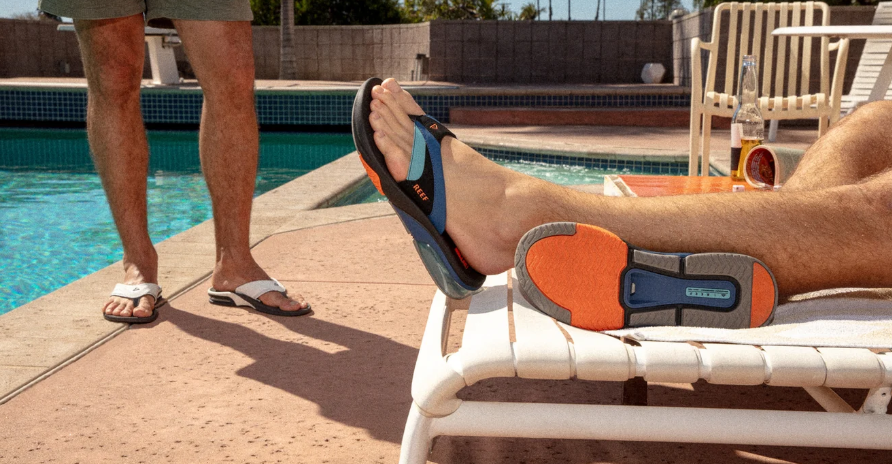
A REEF sandal can be positioned for beach holidays, travel, casual weekends, poolside occasions and everyday summer dressing. Some styles are also designed to transition between outdoor environments and city life.
That versatility is increasingly attractive in a market where consumers are trying to make fewer but smarter purchases.
3. Coastal Style Has Become a Broader Fashion Language
REEF’s strongest intangible asset may be its connection to the coast.
The American fashion consumer has embraced a variety of lifestyle aesthetics—from coastal minimalism and surf-inspired dressing to resort wear and outdoor-inspired fashion.
What makes coastal style particularly powerful is its emotional quality.
It represents:
Freedom. Ease. Travel. Summer. Nature. Adventure.
REEF has been communicating these ideas since 1984.
Its brand story describes the beach as the foundation of its identity and frames the “REEF DREAM” around freedom, adventure and the beauty of nature.
In a fashion market increasingly influenced by lifestyle storytelling, this gives REEF something many newer brands have to spend years building: authenticity.
4. Sustainability Is Moving From Trend to Expectation
Sustainability has also become increasingly important within footwear.
REEF has incorporated recycled and renewable materials into its products for decades. The company states that it became 100% PVC-free in 2007 and has used recycled polyester in sandal straps, while also incorporating recycled content into EVA and rubber compounds.
One notable example is its sugarcane-based EVA technology. REEF says its bio-based EVA solution contains 51% bio content, replacing part of the petroleum-based material traditionally used in midsoles.
The brand also says its leather and suede products use materials from tanneries carrying gold or silver ratings, while selected products incorporate natural materials such as cotton, jute and cork.
This is particularly relevant to younger consumers, who increasingly expect sustainability to be integrated into product design rather than treated purely as a marketing campaign.
5. REEF Combines Heritage With Product Innovation
Fashion is cyclical, but consumers do not necessarily want old products reproduced exactly as they were.
They want nostalgia with modern functionality.
REEF has an interesting advantage here.
The brand’s original Stripe sandal dates back to its early years, and the company has recently revisited the silhouette through its Heritage collection. The updated version retains the visual identity of the original while incorporating recycled PET-derived straps.
This is a powerful strategy in today’s fashion environment.
Instead of choosing between heritage and innovation, REEF can combine the two:
1980s surf heritage + modern comfort + responsible materials + contemporary styling.
That formula fits directly into the current revival of retro-inspired fashion.
The New American Footwear Consumer
Today’s footwear shopper is not simply looking for a “summer sandal.”
They are looking for a product that fits their lifestyle.
A typical purchase decision increasingly involves several questions:
Is it comfortable?
Can I walk in it for hours?
Can I wear it on vacation?
Does it work with more than one outfit?
Will it last?
Does the design feel current?
Is the price justified?
This explains why the footwear industry is simultaneously seeing strong performance from running shoes and renewed interest in comfortable fashion silhouettes.
Consumers are not choosing between fashion and function anymore.
They are demanding both.
From Beach to Street: The REEF Opportunity
The most interesting future opportunity for REEF is therefore not simply selling more sandals.
It is expanding the meaning of the REEF lifestyle.
The brand can speak to several rapidly converging consumer occasions:
| Consumer Occasion | REEF Opportunity |
|---|---|
| Beach & Pool | Water-friendly sandals and slides |
| Travel | Lightweight, comfortable footwear |
| Weekend Casual | Everyday sandals and casual shoes |
| Outdoor Lifestyle | Supportive and durable designs |
| Resort Fashion | Elevated women’s silhouettes |
| Summer Streetwear | Retro-inspired flip-flops and slides |
| Sustainable Fashion | Recycled and renewable materials |
This creates a much larger addressable lifestyle than the traditional “beach sandal” category suggests.
Why the Timing Matters
The timing is particularly favorable.
The U.S. footwear market is not experiencing explosive volume growth. Circana forecasts the overall industry to remain relatively flat through 2026, with price increases offsetting weaker unit demand.
But a flat market does not mean a stagnant market.
It means market share is increasingly being redistributed toward brands that give consumers a compelling reason to buy.
In 2025, performance footwear grew 6%, sport-lifestyle footwear increased 4%, while fashion footwear declined 2%. Yet several fashion silhouettes—including ballerinas, mules and clogs—recorded meaningful growth.
The lesson is clear:
Consumers are not abandoning fashion.
They are redefining it.
The Future: Comfort Will Become More Fashionable
The next stage of American footwear is likely to be defined by a hybrid formula:
Performance + Comfort + Fashion + Lifestyle + Sustainability.
The brands best positioned for the next decade will not necessarily be those producing the most technically complicated shoes.
They will be the brands capable of making consumers feel that one product belongs naturally in multiple parts of their lives.
This is where REEF has a particularly strong foundation.
Its four decades of beach heritage provide authenticity. Its comfort technologies answer the functional needs of modern consumers. Its sustainable-material initiatives respond to environmental expectations. And its evolving silhouettes give the brand room to participate in contemporary fashion.
REEF and the Next Generation of Casual Fashion
For younger American consumers, lifestyle is increasingly expressed through clothing, footwear, travel, wellness and outdoor activities as one connected aesthetic.
A pair of shoes can communicate where you are going, what you value and how you want to live.
REEF’s identity fits naturally into this cultural shift.
It is relaxed without being careless.
Functional without looking overly technical.
Fashionable without becoming dependent on short-lived trends.
And environmentally conscious without abandoning the product’s original beach DNA.
That balance may ultimately become its greatest competitive advantage.
Conclusion: The Future of Footwear Is About Living Well
The American footwear industry is entering a more selective era.
Consumers are buying fewer unnecessary products while investing more deliberately in footwear that offers comfort, versatility, durability and relevance.
The data supports this transition. The U.S. footwear industry reached approximately $89.2 billion in 2024, while the $31 billion sport-lifestyle category demonstrated the extraordinary scale of America’s demand for footwear that can move between activity and everyday life. In 2026, total footwear sales remained modest, but performance, sandals, slides and other comfort-driven categories continued to create important pockets of growth.
At the same time, fashion is moving toward relaxed silhouettes, outdoor references, nostalgic designs and practical luxury.
REEF sits naturally at this intersection.
Born from the surf culture of 1984, the brand has spent more than four decades developing footwear around comfort, freedom and connection with nature. Today, those values are no longer niche beach ideals—they are increasingly becoming the foundation of modern American casual fashion.
Perhaps that is the real significance of REEF’s next chapter.
The brand does not need to convince consumers that comfort can be fashionable.
American fashion has already reached that conclusion.
The opportunity now is to show consumers that the perfect pair of shoes can do something even more valuable:
move with them wherever life takes them.