


Smart Home Fragrance: Industry Status and Future Directions in the U.S.

Abstract
The U.S. home fragrance industry has undergone a significant transformation in recent years, driven by consumer demand for wellness, personalization, and smart home integration. With the rise of IoT-enabled devices and lifestyle-driven consumption, brands such as Hotel Collection are redefining how scent is delivered and experienced in residential and commercial environments. This article examines the current state of the industry and explores the emerging role of intelligent technologies in shaping its future.
1. Industry Overview
The global home fragrance diffuser market reached approximately USD 2.66 billion in 2022 and is projected to grow to USD 4.09 billion by 2030, at a compound annual growth rate (CAGR) of 5.5%.
Within North America, the United States dominates the sector, accounting for nearly 80% of the regional market share in 2024.
This growth is largely attributed to rising consumer interest in home ambiance, emotional well-being, and lifestyle enhancement. Fragrance is no longer viewed as a functional add-on, but as an essential component of interior design and personal wellness.
At the same time, the market has shifted from traditional formats—such as candles and plug-ins—to advanced solutions including cold-air diffusion systems, scent marketing platforms, and smart diffusers.
2. Market Drivers
Several key factors are fueling the expansion of the U.S. home fragrance sector:
(1) Wellness-Oriented Consumption
Modern consumers increasingly prioritize mental health and emotional balance. Home fragrance products are used to create calming, energizing, or restorative environments, aligning with broader wellness trends.
(2) Experience Economy and Lifestyle Branding
Consumers are seeking immersive experiences at home. The popularity of “hotel-inspired scents” reflects a desire to replicate premium hospitality experiences in residential spaces.
(3) Smart Home Adoption
The U.S. smart home market continues to expand rapidly, encouraging integration between fragrance systems and connected ecosystems such as mobile apps, voice assistants, and automation platforms.
3. Current Industry Structure
The home fragrance industry can be broadly divided into three segments:
- Traditional products: candles, sprays, reed diffusers
- Advanced diffusion systems: nebulizing and cold-air diffusers
- Smart fragrance devices: app-controlled, IoT-enabled systems
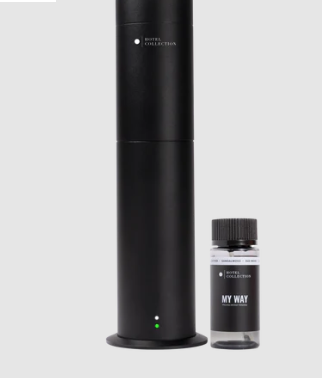
Brands like Hotel Collection operate at the intersection of the latter two categories, offering high-end scent diffusers with HVAC integration, large-area coverage, and subscription-based fragrance services. For example, some systems can scent areas up to 6,000 square feet and utilize waterless cold-air diffusion technology, ensuring consistent, residue-free distribution.
4. Smart Technology Integration
4.1 IoT and Remote Control
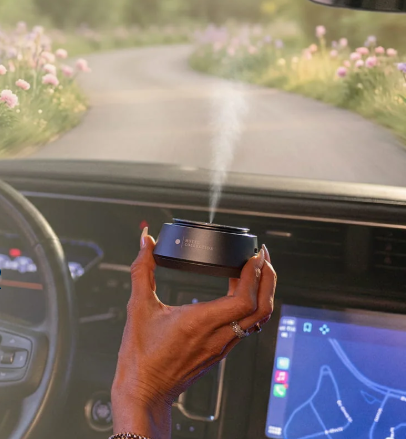
Smart diffusers are increasingly equipped with Wi-Fi or Bluetooth connectivity, allowing users to control scent intensity, schedules, and fragrance types via mobile applications. This aligns with broader smart home trends emphasizing convenience and automation.
4.2 AI-Driven Scent Management
Emerging systems incorporate AI and sensor-based technologies to optimize scent delivery. These systems can:
- Adjust fragrance intensity based on room occupancy
- Respond to environmental factors such as air quality
- Optimize oil consumption through predictive algorithms
Such features represent a shift from static diffusion to dynamic, data-driven scenting systems.
4.3 HVAC Integration and Whole-Home Scenting
High-end solutions now integrate directly with HVAC systems, enabling uniform scent distribution across entire buildings. This technology, originally used in hospitality and retail environments, is increasingly entering residential markets.
5. Emerging Trends
(1) Personalization and Customization
Consumers demand tailored scent experiences, including the ability to mix fragrances, adjust intensity, and schedule usage according to daily routines.
(2) Subscription-Based Business Models
Recurring fragrance oil subscriptions are becoming a key revenue driver, ensuring customer retention and consistent usage.
(3) Sustainability and Health Focus
There is growing demand for eco-friendly, non-toxic, and IFRA-compliant formulations, as well as energy-efficient diffusion technologies.
(4) Multi-Sensory Home Experiences
Home fragrance is increasingly integrated with lighting, sound, and design to create holistic sensory environments, reflecting the evolution of “smart living spaces.”
6. Challenges
Despite strong growth, the industry faces several challenges:
- Product differentiation: Many devices share similar hardware, increasing reliance on branding and scent quality
- Consumer trust: Pricing strategies and aggressive promotions can raise concerns about perceived value
- Technical reliability: Device durability and user experience remain critical for long-term adoption
7. Future Outlook
The future of the U.S. home fragrance industry lies in the convergence of technology, wellness, and design. Key directions include:
- Full integration with smart home ecosystems (e.g., Alexa, Google Home)
- AI-powered personalization based on user behavior and preferences
- Expansion into commercial applications such as retail, hospitality, and healthcare
- Development of sustainable and biodegradable scent formulations
As intelligent technologies continue to evolve, scent will become an increasingly interactive and adaptive element of living environments.
Conclusion
The U.S. home fragrance industry is transitioning from a traditional consumer goods sector into a technology-driven lifestyle category. With strong market growth, increasing consumer sophistication, and rapid advancements in smart technologies, the sector is poised for continued expansion.
Brands that successfully integrate innovation, personalization, and user experience—such as Hotel Collection—are likely to lead the next phase of industry development.